

Can You Live on Your Own Land in an RV in the U.S.? A Complete Guide for Land Buyers

Buying vacant land in the United States opens up endless possibilities - from long-term investment to building your dream home. But one question keeps popping up among prospective buyers:
Can you live on your own land in an RV?
The short answer: Yes, but with important caveats.
Living in an RV on your own property isn't as simple as parking and moving in. Local zoning laws, utility requirements, and permit regulations all play a role. This guide breaks down everything you need to know- from legal considerations to practical setup tips-so you can make an informed decision.
Why Land Buyers Are Turning to RV Living
Before diving into the rules, let's explore why so many people are considering this lifestyle:
Affordability: Avoid rent or mortgage payments while developing your property
Flexibility: Live on your land immediately while planning permanent construction
Low-risk testing: Experience your property before committing to building
Minimalism: Embrace a simpler, mobile lifestyle with lower overhead
Understanding Zoning Laws and Local Regulations
Zoning is the biggest hurdle when living in an RV on private land. Never assume you can park an RV and live in it permanently-regulations vary dramatically by location.
Common Zoning Scenarios
Zone Type | RV Living Permits | Typical Restrictions |
Rural / Agricultural | Often permitted | May limit duration or require agricultural use |
Residential | Usually prohibited | Short-term stays only (14-30 days) |
Off-Grid / Unincorporated | Sometimes allowed | No permanent residence status; utility requirements apply |
Construction Zones | Temporary permits available | RV living allowed only during active home construction |
Questions to Ask Your County Planning Department
Is RV occupancy permitted on my specific parcel?
What is the maximum duration for RV stays?
Do I need a temporary occupancy permit?
Are there setback requirements from property lines?
What utility connections are legally required?
Pro Tip: Always get written confirmation of zoning permissions. Verbal approvals can be overturned or misunderstood.
Utilities: The Real Challenge of RV Living on Land
Owning land is step one. Making it livable requires infrastructure planning.
Essential Utility Checklist
Utility | Options for RV Living | Estimated Setup Cost |
Electricity | Solar panels, generator, grid connection | 500–500 – 500–15,000+ |
Water | Well drilling, water delivery, storage tanks | 2,000–2,000 – 2,000–15,000+ |
Sewage | Septic system installation, portable holding tanks, composting toilets | 500–500 – 500–10,000+ |
Internet | Starlink, mobile hotspots, fixed wireless | 50–50 – 50–150/month |
Off-Grid vs. Grid-Connected Living
Off-Grid Setup:
Solar + battery storage for power
Rain catchment or water hauling
Composting or incinerating toilets
Pros: Lower ongoing costs, complete independence
Cons: Higher upfront investment, requires technical knowledge
Grid-Connected Setup:
Traditional electrical hookup
Municipal or well water
Septic system or sewer connection
Pros: Reliable, familiar systems
Cons: Permit requirements, ongoing utility bills, installation delays
Not Ready to Buy Land? Explore These Temporary Options
If you're testing the waters before committing to land ownership, these platforms offer excellent short-term RV experiences:
Harvest Hosts
Stay overnight at unique locations including farms, wineries, and private properties across the U.S.
Hipcamp
Connect with private landowners offering scenic camping spots, often in remote or nature-rich locations.
Benefits of Testing First:
Experience different climates and terrains before buying
Understand your RV's limitations
Discover what type of land access works best for you
Try off-grid living without full financial commitment
For practical guides on RV setups and outdoor living, visit RV Outdoor Life.
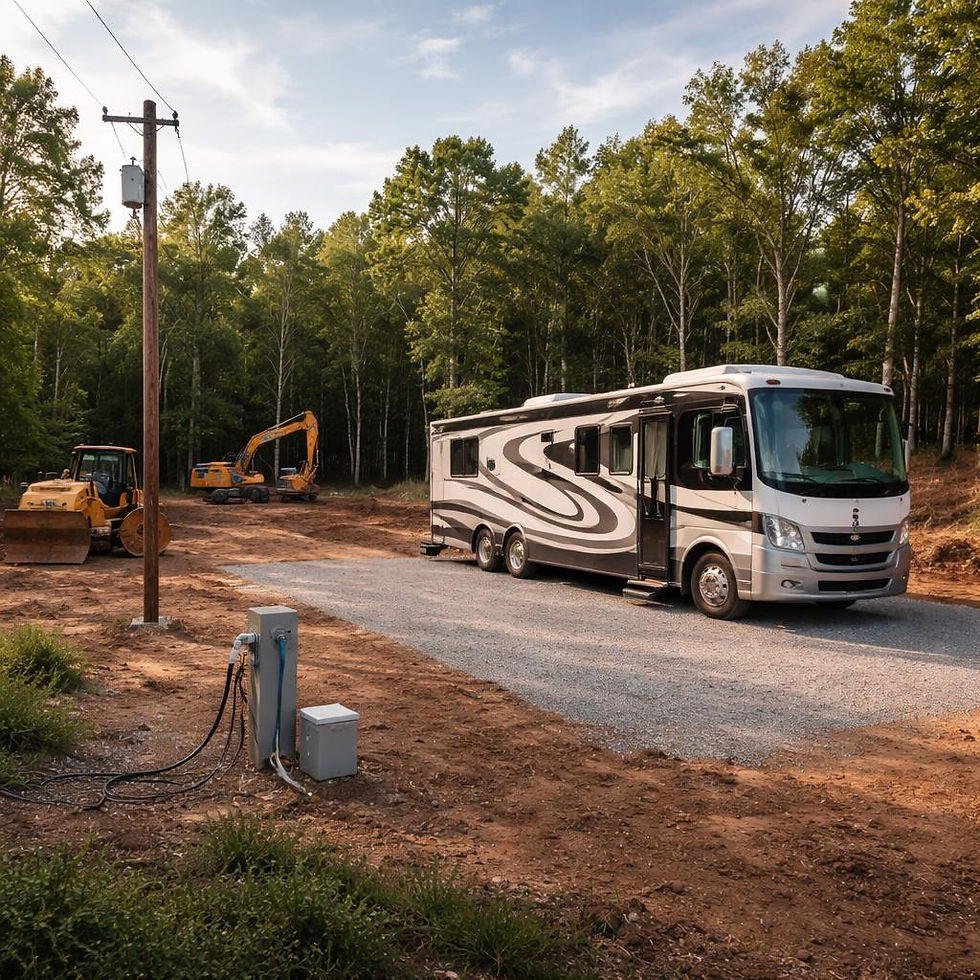
How to Prepare Your Land for RV Living
Ready to transform your property into an RV-friendly site? Here's your action plan:
1. Ensure Legal Access
Verify road access is legally documented (easement agreements if needed)
Confirm roads can support RV weight and dimensions
Check seasonal accessibility-some roads become impassable in winter
2. Evaluate Terrain
Flat land: Easier setup, lower costs, better drainage options
Sloped land: Requires leveling, may complicate septic installation
Clear vegetation: Remove obstacles and create adequate parking space
3. Secure Required Permits
Even in rural counties, you'll likely need permits for:
Septic system installation
Well drilling
Electrical work
Driveway/access road improvements
4. Define Your Long-Term Vision
Goal | Recommended Setup | Timeline |
Temporary stay during construction | Basic utilities, minimal investment | 6–24 months |
Seasonal recreational use | Solar + water storage, composting toilet | Weekends/vacations |
Long-term permanent living | Full septic, grid power, permanent structures | 2–5 years |
Off-grid homestead | Comprehensive renewable systems, sustainable water | 3–7 years |
Pros and Cons of RV Living on Your Own Land
✅ Advantages
Benefit | Description |
Cost Savings | No rent or mortgage payments during development |
Immediate Use | Start enjoying your property right away |
Flexibility | Easy to relocate or sell if plans change |
Gradual Development | Build infrastructure over time as budget allows |
Location Freedom | Live where you want without waiting for construction |
❌ Challenges
Challenge | Description |
Legal Complexity | Zoning laws can be restrictive and confusing |
Weather Vulnerability | RVs offer less insulation than traditional homes |
Space Limitations | Storage and living space constraints |
Utility Logistics | Managing power, water, and sewage requires planning |
Resale Complications | Future buyers may view RV setup as temporary |
Key Takeaways: Is RV Land Living Right for You?
Living in an RV on your own land can be rewarding and cost-effective, but success requires:
Due Diligence: Research zoning laws thoroughly before purchasing
Realistic Planning: Budget for utility setup and ongoing maintenance
Legal Compliance: Obtain necessary permits and stay within local regulations
Long-Term Thinking: Align your setup with your ultimate property goals
Quick Decision Framework
Consider RV land living if you:
Value flexibility and minimalism
Want to live on your property while building
Have researched and confirmed local zoning permissions
Are prepared for off-grid or alternative utility solutions
Reconsider if you:
Need guaranteed year-round comfort in extreme climates
Require extensive space for work or family
Aren't prepared for ongoing maintenance and legal compliance
Prefer turnkey solutions without infrastructure planning

Final Thoughts
The intersection of land ownership and RV living represents one of the fastest-growing lifestyle trends in the U.S. Whether you're exploring through platforms like Harvest Hosts and Hipcamp, or ready to set up your own permanent RV base, preparation is everything.
With proper planning, legal awareness, and the right infrastructure, your land investment can become more than just a financial asset-it can become the foundation for a flexible, fulfilling lifestyle.
Ready to start your land search? Bookmark this guide and reference it as you evaluate properties, check zoning requirements, and plan your RV-friendly setup.
Comments