

How Much Does It Really Cost to Prepare Land for RV Living in the U.S.? (2026 Guide)

Most people assume the expensive part of RV living is the RV itself.
It’s not.
The real financial shock hits when you try to live on your own land. I’ve worked with dozens of landowners across the U.S., and the same pattern repeats: someone buys cheap rural land thinking they’ll “just park an RV”… then discovers they’re $15,000-$50,000 deep before they can legally and comfortably stay there.
This guide breaks down the actual RV living costs involved in preparing land in 2026 - no fluff, no fantasy numbers.
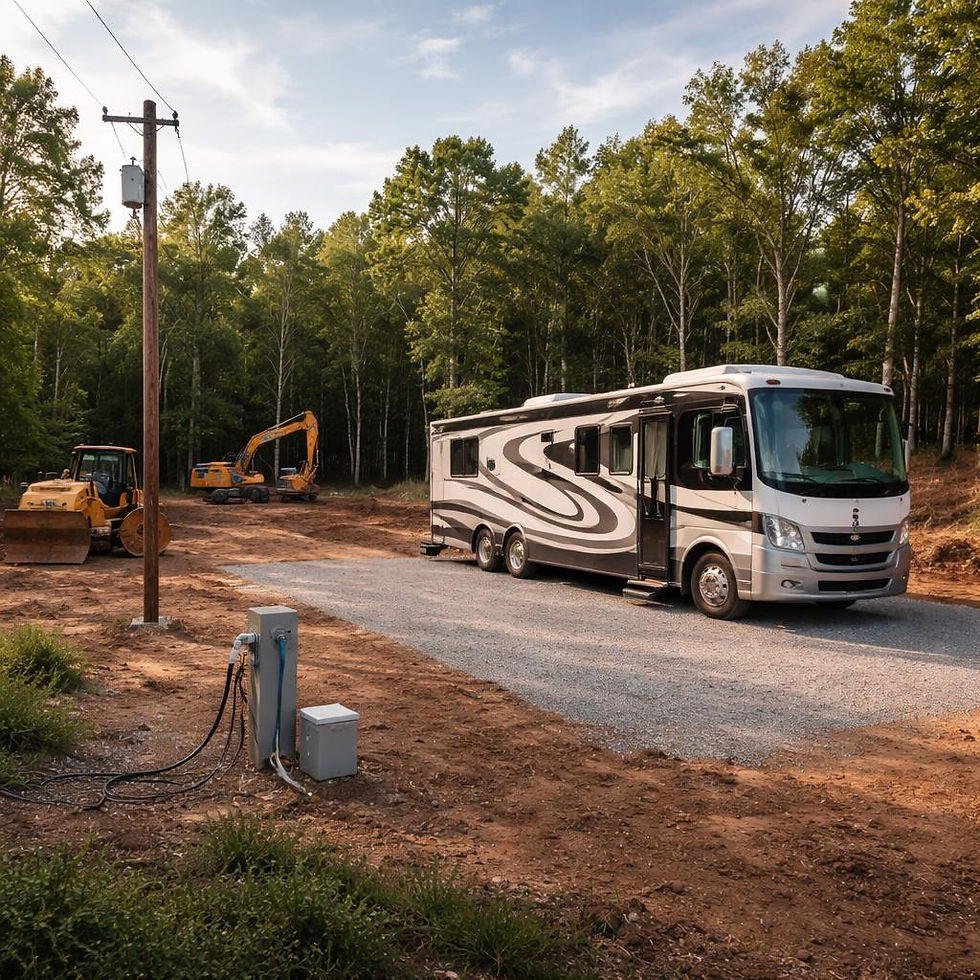
The Big Picture: What Does It Cost to Prepare Land for RV Living?
In most parts of the U.S., a realistic total range looks like this:
Bare minimum (DIY, off-grid): $5,000 - $15,000
Mid-range (partial utilities): $15,000 - $35,000
Full setup (grid + septic + road): $30,000 - $75,000+
That’s before buying the RV.
Why such a big range? Because the land itself dictates everything - soil type, location, access, and local regulations all affect your RV setup cost in the USA.
Let’s break it down piece by piece.
Land Preparation Costs
Before you even think about hookups, your land needs to be usable.
What’s involved:
Clearing trees or brush
Leveling and grading
Soil compaction
Creating a stable RV pad (gravel or concrete)
Typical Costs:
Light clearing: $500 - $3,000
Heavy clearing (trees, stumps): $3,000 - $10,000+
Grading and leveling: $1,000 - $5,000
Gravel pad: $1,500 - $5,000
Concrete pad (optional): $4,000 - $12,000
Real-World Insight:
If your land looks “cheap,” there’s usually a reason. Rocky terrain, dense trees, or poor drainage can double your prep costs quickly.
Common Mistake:
Skipping proper grading.
I’ve seen RVs sink, tilt, or develop structural stress because the ground wasn’t prepped correctly. A $2,000 saving upfront can cost you far more later.
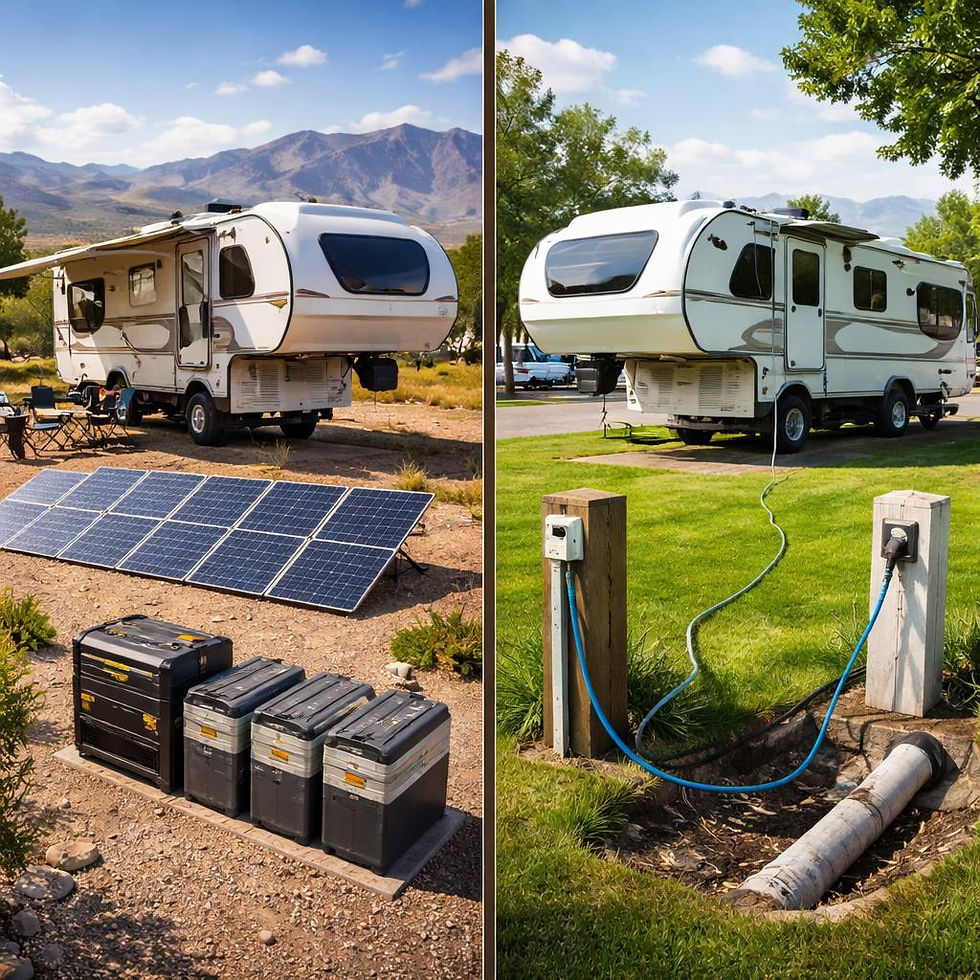
Electricity: Grid vs Solar
Power is where RV living costs vary wildly.
Option 1: Grid Connection
If utilities are nearby, this is usually the most convenient option.
Costs:
Utility hookup: $1,000 - $5,000
Running power lines (distance matters): $10 - $30 per foot
Meter + panel installation: $1,500 - $4,000
👉 Total typical range: $3,000 - $15,000+
If the nearest pole is 500 feet away, you’re already looking at $5,000-$10,000 just for line extension.
Option 2: Solar Setup
Off-grid solar is popular - but not cheap if done right.
Costs:
Basic DIY system: $2,000 - $6,000
Mid-range system (reliable full-time use): $8,000 - $20,000
High-end system (AC, heavy loads): $20,000 - $40,000
Real-World Insight:
Cheap solar setups fail fast. Batteries degrade, inverters struggle, and people end up running generators anyway.
If you're serious about off-grid living, don’t underbuild your system.
Practical Tip:
A hybrid approach (solar + occasional generator + limited grid) often gives the best balance of cost and reliability.
Water: Well vs Hauling
Water is one of the most underestimated parts of preparing land for RV use.
Option 1: Drilling a Well
Costs:
Well drilling: $5,000 - $15,000
Pump + system: $1,500 - $5,000
Water testing + permits: $300 - $1,000
👉 Total: $7,000 - $20,000+
Key Variable:
Depth.
In some states, you hit water at 80 feet. In others, it’s 400+ feet - and costs skyrocket.
Option 2: Water Hauling
Costs:
Water tank setup: $500 - $3,000
Delivery or self-hauling: $50 - $200 per fill
Real-World Insight:
This works short-term, but most people get tired of hauling water fast - especially in hot climates.
Common Mistake:
Not checking water rights or restrictions.
Some counties regulate well drilling or water use more strictly than buyers expect.
Sewage: Septic vs Alternatives
Waste management is where many RV land setups go wrong - especially legally.
Option 1: Septic System (Best Long-Term)
Costs:
Septic system installation: $5,000 - $20,000
Soil testing (perc test): $300 - $1,000
Permits: $500 - $2,000
👉 Total: $6,000 - $25,000
Important:
If your land fails a perc test, septic becomes much more expensive (or impossible).
Option 2: Holding Tank / Pump-Out
Costs:
Tank setup: $1,000 - $4,000
Pump-out service: $100 - $300 per visit
Option 3: Composting Toilets
Costs:
Unit: $1,000 - $3,000
These reduce black water needs but don’t eliminate gray water disposal requirements.
Legal Reality:
Many counties require approved sewage systems - even for RV living.
Always check zoning before buying land.
Access Roads and Driveways
You can’t live on land you can’t reach - especially with a large RV.
Costs:
Basic gravel driveway: $1,000 - $5,000
Long rural driveway: $5,000 - $20,000+
Culverts or drainage fixes: $500 - $5,000
Real-World Insight:
Delivery trucks, propane services, and emergency vehicles all need access - not just your RV.
Common Mistake:
Ignoring seasonal conditions.
A dirt road that works in summer can become unusable in winter or heavy rain.
Cheap Setup vs Proper Setup
Here’s where expectations and reality often collide.
Cheap Setup (~$5K-$10K)
Minimal grading
Basic solar
Water hauling
No septic (temporary solutions)
DIY everything
Pros:
Low upfront cost
Quick to start
Cons:
Not always legal
High ongoing hassle
Lower comfort
Higher long-term costs
Proper Setup (~$25K-$60K+)
Full site prep
Reliable power (grid or strong solar)
Well or consistent water
Septic system
Solid road access
Pros:
Legal compliance
Comfortable long-term living
Higher property value
Cons:
Significant upfront investment
If you're planning to stay more than a year, the “cheap setup” often ends up costing more due to upgrades and fixes.
For a deeper look at how these systems fit together, this complete RV living breakdown is a helpful reference when planning your setup.
Hidden Costs Most People Miss
These can quietly add thousands to your RV setup cost in the USA:
Permits and inspections: $500 - $5,000
Zoning compliance: Time + possible redesign
Propane setup: $500 - $2,500
Internet (Starlink or rural options): $500 - $1,500 setup
Drainage improvements: $1,000 - $5,000
Practical Tips From the Field
1. Always Check Zoning First
Some counties:
Ban full-time RV living
Limit how long you can stay
Require a primary structure
Ignoring this can make your land unusable for your plan.
2. Visit the Land in Bad Weather
Dry land hides problems.
Check:
Drainage
Mud conditions
Road access
3. Get a Perc Test Before Buying
If septic isn’t viable, your entire plan may collapse - or become much more expensive.
4. Budget 20-30% Extra
Unexpected costs are normal in land development.
5. Don’t Underestimate Time
Permits, contractors, and utility approvals can take months.
Quick Cost Summary Table
Category | Low End | High End |
Land Prep | $2,000 | $15,000+ |
Electricity | $3,000 | $40,000 |
Water | $500 | $20,000 |
Sewage | $1,000 | $25,000 |
Access Road | $1,000 | $20,000+ |
Total | $5K | $75K+ |
Final Thoughts: Is It Worth It?
Preparing land for RV living isn’t cheap - but it can still be far more affordable than traditional housing.
The key is going in with realistic expectations.
Actionable Advice:
Start with zoning and legal requirements
Walk the land before buying
Price out utilities before closing
Decide early: short-term setup or long-term living
If you treat this like a real infrastructure project - not a shortcut - you’ll avoid the most expensive mistakes.
And once it’s done right, you’re not just parking an RV - you’re building a flexible, independent lifestyle that’s hard to match any other way.

Comments